Showing posts with label Creativity. Show all posts

Thursday, October 20, 2016

Working in Azerbaijan: "We really entered a different life"

This past February, Bond Street Theatre travelled to Azerbaijan to conduct a program with local university students, in collaboration with the US Embassy.


We landed in Baku and, with barely a moment to catch our breath, immediately hit the ground running. The capital of Azerbaijan, Baku is a sprawling urban center that is half old Soviet buildings, and half new construction made possible by vast sums of oil wealth. We had three weeks to create, rehearse and tour a piece of social theatre with students from the State University of Culture and Arts, a daunting task to say the least.

Azerbaijan is a tiny country located on the edge of the Caspian Sea, and politically dwarfed by its neighbors: Iran to the South, and Russia to the North. As a former member of the Soviet Union, Azerbaijan is relatively new to democracy, and still struggles with corruption, with a government that does not look kindly upon dissidents.

Week 1: “You make us actually want to learn!”

Within this context, we began our first week by training 22 students of both the social sciences and the arts in Bond Street Theatre’s social theatre techniques. Our collaborative, exploration-based approach was a totally new experience for the participants, most of whom were used to authoritative teachers, and accustomed to a culture of individual as opposed to group achievement. The idea of an “ensemble” was a new concept.  One of the workshop participants explained that, “We didn’t feel any favoritism. This made us strong and feel like we have one shared goal,” while another proclaimed, “You make us actually want to learn!”

The students learned how to devise a performance based on their own assessment of social issues, and how to do this quickly!  For most of them, this was a rare opportunity to be asked their opinions on issues without authority figures demanding a set expected answer.


Week 2: Ideas in Action

From the initial group of 22 participants we selected 8 to create an original performance. The piece focussed on domestic violence, with the message that violence begets violence, and that breaking the cycle of violence in the familial context is essential in breaking the cycle of violence in society.  In countries where violent extremism is a continual problem, we find a strong correlation with the prevalence and acceptance of domestic violence.  A child who witnesses violence as a response to problems learns that violence is a valid problem-solving mechanism. The play addressed the idea that young women should make their own decisions about marriage, education, and other major life choices, rather than their parents or societal pressures.

While gender equality laws have been enacted in Azerbaijan, implementation remains poor, especially in rural areas. The youth were eager to share these stories, and to bring issues of corruption to light. The result was a brand new play, titled Moon Cycles, featuring both the students and members of Bond Street Theatre.


Week 3: Maybe Theatre
The troupe of students and actors toured Moon Cycles to five locations across the country, reaching well over a thousand people. The group even presented excerpts of the performance live on Azeri TV channel ANS TV.  After each show, we asked the audience to ask questions to characters in the play, which led to complex and insightful conversations. The actors had to respond to some challenging questions, and we observed their confidence and understanding of the material grow with each performance.

During the tour of the show, it came time to name the newly-created theatre troupe, and the name “Maybe Theatre” was suggested. Throughout the rehearsal process, the word “maybe” was used as a frequent response to suggestions. This happened often enough that it became one of the first words everyone learned in English. In a culture where learning typically does not involve open-ended questions, the name “Maybe Theatre” stuck.

The new Maybe Theatre plans to continue their work, improving and touring the show, and creating new social theatre productions. As one of the group’s members, explained: In 21 days, we experienced things we never had before. When we entered the door into the space, we really entered a different life.


Tuesday, February 17, 2015

First Impressions of Afghanistan and the Creativity in Action Program

Heddy Lahmann-Rosen, a Bond Street company member, just returned from her first visit to Afghanistan with Michael and Joanna for our new, two-year Creativity in Action program. Heddy will visit Afghanistan a handful of times during the course of the program, acting as our Outside Evaluator, and eventually using this research in her PhD thesis. 


I'm a little late to the party on getting a blog entry going for my time with the Creativity in Action program in Afghanistan, but I'll do my best to give a flavor of the whole experience. 

I embarked upon the adventure to Kabul with Michael and Joanna in mid-January, and I stayed for 2 weeks. Joanna and Michael are still there working away at building this program and making sure it's got the wings to keep flying when they come back.

My first week primarily consisted of a good amount of administrative work and preparation for this big and ambitious program. This baby is no small feat! The Creativity in Action program is 2-year youth development project that includes 15 young people from each of 25 provinces across Afghanistan (375 youth in all!). The program is providing jobs for local Afghan artists to work with youth– teaching them about expressing themselves and accessing their creativity, and then mentoring them and supporting them as they create and implement improvement projects in their own communities. If you can't tell, I'm pretty excited about it. So excited in fact that I'm centering my (eventual) dissertation around this phenomenal program!

So what's Kabul like? That’s kind of a tough question to answer, because I didn't really see so much of the outside world except through the car window. What did I see out the window? Well, Kabul is less conservative than other parts of the country. Some women wear burqa’s, although there are very few women on the streets anyway. I’d say it’s like 90% men. Unpaved roads for the most part. The air outside smells smoky from the ovens they use to warm homes. It’s winter and pretty cold – ranging from around 35 degrees F to 50. The heating isn't what we’re used to in the US, so lots of layers are necessary. It even snowed a few days while I was there!

The driving in Kabul is really something. It’s positively fearless (except for a Western passenger like me) – I mean, we navigated through the most insane tangle of cars on the way home one night– I thought we might be in serious trouble and stuck there for awhile (because if we were in the US, we would have) – but somehow our driver just wriggled, honked, and near-missed his way through. It was something to behold. 

The food is awesome! Maybe with the exception of breakfast, but that’s just because they don’t really do breakfast like we do. But everything else was AMAZING. Flower street, which had several florists up and down the street, was very pretty! Butcher street is not so pretty, as you might imagine.

The Afghan people I had the opportunity to meet are lovely. Very kind and warm. I met and spent some time with the Afghan artists who are/will be leading the youth workshops and are long time friends and creative partners of BST. They were all so eager to share their thoughts and experiences with such openness and enthusiasm. It was a major highlight!

I also had the opportunity to see some of the youth workshops in action in the Balkh region. I had such a wonderful time  meeting and getting to know the youth participating. They're a very inspirational group. They were incredibly warm and welcoming and had many questions about my doctoral program and my experience of being in their country. They are all very concerned and passionate about the state of their community and country and are eager to talk about the problems they see and ideas for ways to go about addressing them. I was pretty floored by how engaged they were with the whole process from the get-go. After I left, the youths from Balkh and Kunar met in Kabul for a combined workshop. This program provides a unique opportunity for connecting young passionate problem-solvers from across the country and across ethnic divides. It's killing me to have missed the Kabul workshop! But alas, my spring semester classes beckoned me back. I've been living vicariously through email updates from Joanna on the collective workshop with the 2 groups in Kabul- I will let her tell it- from what I read, the experience is something truly special.

I'm already looking forward to my return!


Thursday, February 12, 2015

Youth from across Afghanistan collaborate in Kabul

Joanna keep us up-to-date about the goings-on in Kabul. Afghan Project Leaders have completed workshops in Balkh and Kunar, and now youth from both groups are in Kabul together for a week of workshops, training, and idea-sharing.
Joanna Reports:

This morning the participants were all happily doing warm-ups and exercises. Now they are creating their "community mapping" (drawing their region) and then their "ideal communities" (as mixed Kunar-Balkh groups, hopefully sharing their ideas about what makes an "ideal" community).  

The sounds of laughter fill the house as it should be.  

They did their "community profiles" last night.  Very interesting -- each presentation was really really well done!  The issues that rise to the top are environment, medical, and women's rights.  The Balkh girls were all about pre-marriage testing to prevent certain diseases, and the need for vaccinations.  Both the Balkh and Kunar guys were most concerned by the wanton cutting of trees, soil erosion and proliferation of trash.  And the Kunar girls showed some shocking photos of the violence against women, including trading girls for bad debts, and blaming women for the crimes of others.  Unbelievable!  

We worked with the girls all together this morning and the Kunar girls are ready to speak out... but still cover up the second a male or a camera is anywhere close.  Three are daughters of other active women, and the other two need some gentle coaxing... but that's okay.  They will all help each other I hope.  

And then, two days later…

The workshops are continuing well! It is super-busy and also super-fun.  

We have had some great guests speaking about youth activism, how to meet challenges, how to get the government to listen, etc.  And today we went to the Presidential Palace!  It was grand... and an amazing experience for the youth -- like a trip to the White House to meet ... well, okay, not Obama... but maybe Joe Biden.  


We had a two-hour session with one of the top people during which the participants stood up and talked about their issues. Wow.  Can you imagine getting a chance to air all your grievances with some top government person who is actually listening and writing it all down. Even the Kunar girls all covered up stood up and gave their rant.  The guy was very moved, and then he told us that he had also had this idea to set up creative youth projects in different provinces, then bringing the groups together and implementing the projects.  So he was very happy that we were doing just that.  

This Balkh-Kunar collaboration is the first of many in the coming years. Groups from across Afghanistan will come to Kabul and share ideas with group members from a different province, each with their own issues, solutions, history, and culture. Stay posted for more updates from the field! 

Wednesday, January 28, 2015

Theatre for Social Change Successes and Challenges from Kakamega, Kenya

Our Fall 2014 intern, Jessy Hodder, is spending the semester in Kakamega, Kenya where she is conducting physical theatre workshops with various groups, from sex workers to street boys. She has been testing out our new theatre for Social Development manual. Here, she describes some of the challenges and successes of a recent training session with sex workers.

I had a very positive meeting this morning with Kakamega's sex workers.  

The first thing that I should note is that, like many places around the world, things are far more challenging than you expect them to be.  Things don't start on time, and the people are not used to open, unstructured spaces.  It took the women some time to get comfortable in a space without desks and chairs.  Having a translator also presented some real challenges.  I was never sure if what I was explaining was being fully understood by all participants.  Things can so easily get lost in translation.  I think that it may be helpful to include notes concerning these kinds of logistics (tips or tricks to help facilitators overcome such difficulties) within the manual. 

Below is a list of the activities that I facilitated and some of the observations that I made.


Spy:  Secret Friends & Enemies

At the beginning of this exercise, the women protested profusely.  They hated the idea that they had to select an "enemy" in the group.  I tried to explain that it was just for the sake of the activity, but they wouldn't have it.  So we changed it to person A and person B:  "Keep person A between you and person B."  I thought this was interesting.  It definitely reinforces the sense of community that is so ingrained here, and indeed the sisterhood of those who suffer on the streets.

Also, the fact that Kenyan women are such touchy-feely people posed a problem.  When I said "go," the women ran to the person that they had chosen as their "friend" (person A) and just stood there hugging them and laughing.  They had completely forgotten about the "enemy" (person B).  They were so loving and supportive that they got caught up in cuddles and disregarded the activity itself.  Because of this, we may want to suggest that, in certain cultural contexts, participants can never touch their friend OR enemy, ensuring that some kind of physical activity takes place.


Calling Over the Mountain 

I explained the importance of our names, especially in contexts where we feel treated like objects.  The women had absolutely no difficulty shouting their names.  They were very loud, and they loved it!  

I added a little something extra to this activity which I thought worked well.  I asked them to imagine that they were standing on a stage in front of the world.  I asked what they would want to say if they were given a single sentence.  They were all eager to share.  Some of them declared their strength or beauty, others testified to their faith or beliefs, and others shouted funny exclamations.  The voices of these women are not often heard, and they loved being able to speak loudly and with conviction. 


Making Group Shapes and Scenes . . . with a Time Limit!

Participants worked in groups of five.  I focused on items that they are very familiar with - the jiko (outdoor stove), nyumbani (house), matatu (bus), and a sofa set.  They really enjoyed using their bodies to represent these items, and they worked well in their teams.  However, because of the stigma against trousers here, the women struggled a little bit with moving around in their long skirts.  I know that this is a challenge in many different areas of the world, but it was definitely something that affected their movement.


A Commercial - Selling Something New

This activity was particularly interesting to me.  I will begin by saying that Kenyans are wonderful public speakers - they have little or no fear of addressing a group.  In fact, they love doing it whenever they get the chance. 

I had tried very hard to explain the word "invention" - an object that doesn't yet exist that would make one's life easier or better.  However, either the word got botched in translation, or the culture is such that they don't think in terms of new objects and gadgets.  Technology is not nearly as prominent here as it is in other places.  Their mindsets are also extremely practical, and they are desperate to make any money that they can to support their children, particularly in terms of school fees.  

When they presented their inventions to the group, almost all of the "inventions" were in the form of possible businesses (basket making, embroidery, selling maize, etc.) that they could set up in the community.  While this was not expected, it attests to their deep desire to become self-sufficient.  We spoke for a while about where they might get the capital to start one of these businesses.  This, of course, is one of their greatest challenges, but we are looking for ways of helping them.


Image Theatre or "Photographs" 

In groups of five, the participants were asked to think of a time when they experienced sadness.  Some of the groups became emotional when telling their stories, and it was great to see the groups counselling and loving one another.  Each story was presented either as an image or as a scene.  The audience was then asked to advise the woman on how to fix or change the situation.  I did not feel that they were ready for foruming the scenes this time around, so they just spoke from their seats.

The stories included:
- A woman was thrown out of her house by her husband.
- The living space of one woman had been thrashed by her landlord.
- One of their children took her school fees and blew it on alcohol and other frivolous items in town.

Unfortunately, we had to stop this activity short.  Two men had entered the room on business, and the women were uncomfortable sharing with them in earshot. 

I concluded the workshop with a self-defense lesson and discussion (30 minutes).  At this point, their bodies were warm and more able to move.  We spoke about precautions that they can take when they are walking along the road at night, and how they might defend themselves if attacked from the front, from the side, and from the back.  They seemed to really appreciate this kind of training.

We sang a good African tune and shared lunch together.  It was a successful session! 

Saturday, July 14, 2012

Things I Learned in Guatemala


Ilanna reflects on her first trip with Bond Street Theatre to Guatemala.

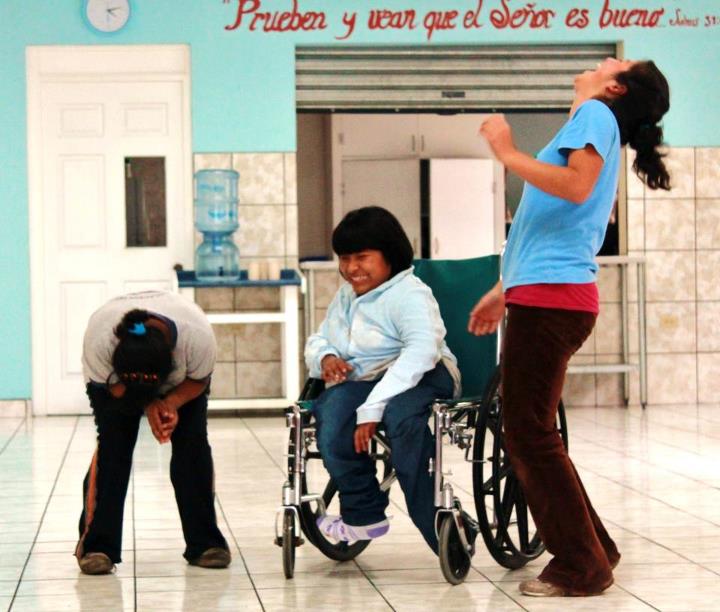
When I first learned I’d be going on our project to Guatemala to work with girls at an orphanage, images flashed through my mind: pessimistic and frail children, theater as the Answer to All Their Problems, and strolling through the countryside en route to our performances. Thankfully (for the first two), I was dead wrong. The girls we met at the orphanage are strong, resilient, and optimistic. They are opinionated and determined, smart and hopeful. And they’re not looking for us to answer their problems—they were looking to us for friendship, fun, leadership training, and teambuilding. And with those as my redefined mission, I got to breathe a sigh of relief. “ohhh--my job is to try to make life richer and teach people how to be proactive, not to Provide the Answer.” And the gusto the girls showed in the following three weeks trying goofy things, helping each other, letting themselves get silly, learning dances and attempting it in homemade masks, creating both poignant and ridiculous tableaux, and then discussing everything—all this proved our work had achieved its purpose. 

Ilanna and Christina performing Se Necesita Soñyar.  
Thanks to John Kirkmire.
I think some of my favorite moments occurred mid-performance of our clown play, Se Necesita Soñar. In the show, I wanted to go to the ocean with the cricket and Christina didn’t want to go.  We led our respective sides of the audience chanting “si si si!” or “no no no!”. Each performance, right before that part, I’d look out at my half of the sea of eager eyes, and know they were with me. I’d make a hand gesture meaning “you too, this time!” and a chorus of voices would join with my chant. 

Where were the shy, unfocused children I had been warned of? These kids were anything but. Kids are kids everywhere—they latch onto a presence that gives them attention and run with it.  After some of the performances, we would take our bow and leave to the chant of “Otra! Otra!” (“More! More!”). I was afraid it would be like pulling teeth to get these kids to participate; in fact the challenge was in getting them to remain passive audience members. Some of these kids had never seen theater or been given the opportunity to be silly in a group before. I think we did this show, about a cricket following its ridiculous dream to go to the ocean, for those kids. I like to think they went home that night, where they may or may not have food to eat, running water, or literate parents, smiling and dreaming about their own desires, just a little bit more prepared to deal with the challenges of the next day. 

Squished in the back of a truck indeed!
Oh--and we didn’t leisurely stroll to these shows, as I had for some reason assumed. We happily made our way squished into tiny tuk-tuks and the backs of pick-up trucks, bumping along to bring smiles and laughter to environs alarmingly bleak but wholeheartedly deserving. 

Things I Learned in Guatemala:

1. You can never listen to Shakira’s “Waka Waka” song too many times. Especially while doing a free style movement warm up!

2. The city of Antigua is beautiful, old, and colorful. It is taken over by students at Spanish schools and gringo NGO workers. Imagine “Epcot Guatemala”. But you don’t have to look far to find the other side of this facade. A 10 minute drive out of the city’s picturesque cobblestoned streets brings you to small farms that have “se vende tortillas” signs, lots of electric barbed wire, and roads in various stages of development. I’m glad that the show we’re touring will bring us out of this little paradise and into areas with more turmoil and less access to foreign checkbooks.

3. Teaching in Spanish is difficult, but gets exponentially easier everyday. We use many of the same words (body parts, theater lessons, simple commands) everyday, and now they are beginning to be second nature. It’s amazing how much I can get across by saying a few Spanish phrases and then using my body and facial expressions to convey the rest of the thought. It has also delightfully surprised me how patient the girls are with our Italian- and Creole-peppered Spanish (complete with competing accents).

Ilanna in the world's most beautiful McDonalds.
4. Antigua has been said to have the most beautiful McDonalds in the world, and this morning as I was sipping a frozen latte staring at a volcano topped in clouds peaking up behind the ruins of an old church, which was situated on the other side of a be-fountained courtyard, I couldn’t help but agree.

5. Water bottles make very good puppet cricket bodies, especially when covered with old green corduroy fabric.

6. Even though it is not my personal belief system, I cannot doubt the good that God, Jesus, and the church has done for many of the people I’ve met here. The girls at the orphanage, who’ve all been taken away from their families because of sexual abuse, get so much hope from religion. Who am I to say that’s not valid? Where do I get the authority to think “those are just stories” or “you determine you own destiny”? If that’s what people want to believe, then okay, their beliefs make it real for them. And that’s enough.


Thursday, June 21, 2012

Four Parables: Guatemala Update 2

Check out Olivia's second Guatemala update from June 4.

Hello all!

Greetings from Antigua. This week and next will be a bit mad- we have a show to create with the girls, Guatemalan artists to meet, and some volunteer work here in Antigua. This morning we worked with malnourished babies- the kids today were up to 7, but none looked older than  4.  Sunday we are serving dinner at a local homeless shelter.  Ida (of Ida's Hjelpefond) always provides at least two hot meals at the shelter when she is here, and I am fortunate to overlap with one.


A wonderful moment in rehearsal.
But....drumroll...the big news is about the play! The girls at Oasis had homework to come up with a short piece about lack of love, and we got some great stuff.  Yesterday, the girls workshopped the four parables they made about 'la falta de amor', turning them into fairy tales with strong messages.  

Tale 1: A little girl lives with her mother in the mountains. They are a very poor family, so she goes out to beg for food and to forage in the basura (the trash dump). Underneath old clothes, wrappers, and other discarded items she finds a broken doll. She sees that although it is broken, it can be made better.  So she picks it up (after a little game of Dead and Alive) and takes it home. Her mother is appalled, but the girl convinces her and they fix it up, clean it off, and sell it for more money. This becomes their lucrative business- selling remade dolls to local children.

Tale 2: There are four animals in the forest- a proud and fierce lion, a big strong bear, a small ant who does not think well of himself or anyone else, and a wise worm. The ant, lion and bear are fighting about a beautiful flower, each speaking too loud to hear the others. The worm comes upon this ruckus, and asks what they are doing. When he hears, he notes that the flowers are common in the forest and that each animal could have more than one flower if they work at it. After pondering that, the animals all agree t
hat they should all enjoy the flower and dedicate themselves to cultivating even more.


Tale 3: There is a town in the mountains where everyone fights and nobody cares about one another.  Gangs fight for power, and the town is a mess. Three friends come to town, see the situation, and know that they can do something about it. They go to each person individually, offering love and friendship instead of fighting. Eventually they convince the whole town that it is better to meet together in faith than fight.

Tale 4: There is one tree in the forest who stands alone. It is proud of itself, thinking itself the strongest and best tree around. One day, a woodcutter comes along and cuts it down easily.  Then the woodcutter goes to a grove nearby, where all the trees have grown together.  He tries and he tries to cut the trees down, but he can't - the trees are united!

The trees.

The girls have started blocking these stories.  We have four directors/authors who have some distinct ideas about what they want to say and how they want to say it.  Christina and I found a framing device: two sisters reading each other these stories from a book of parables to calm one another down.  


I am so proud of these girls for their focus, for these incredible thoughts, and their strength. I wish you could all hear the conversation we had yesterday about the messages and themes of these stories. I was blown away.

More to come!
Olivia

Monday, April 23, 2012

A Day in the Life: Jalalabad Update 7

Michael writes (and photographs!) from the Theatre for Social Development project with Nangarhar Provincial Theatre in Jalalabad, Afghanistan.

So here is a photo entry that will give you a rough idea of a day in the lives of some a-typical Americans and Afghans in the city of Jalalabad.

Firstly: Joanna boarding the embassy arranged flight from Kabul to Jalalabad.  Okay, we don't do that everyday, but it did start our adventure here.

The Bond Street Theatre team: Joanna, Jamail - our Pashto-speaking translator from Kabul, and Sahar, our native New Yorker actress and Dari speaker.
And me - working hard at the Yellow House, our rehearsal space for the Nangarhar Provincial Theater men's company.  
The Yellow House is an oasis for the Nangarhar artists, founded and supported by the Australian filmmaker George Gittoes and the actress Hellen Rose.  Hellen tells a fascinating tale of their work in Jalalabad here: 
As for the artists themselves, check out:


Also in residency at the Yellow House, an interspecies collaboration between Ezmarai the dog and Dali the monkey.

In the mornings we have been training a new team of young women -- 14 in the workshops, of which six are creating a new show. 

Yeah, the picture looks pretty static -  chairs, lecture, blah blah - but that has NOT been typical of the work.  The morning starts with a vigorous warm up by your's truly, followed by various exercises and techniques in physical theatre and forum theatre by the three of us (with translations by Sahar and Jamail).  
Though they were a bit shy and unsure at first, they quickly warmed to the work and have a great time.   As you may have gathered by the other entries here, photographs are a BIG problem for them-- the proliferation of Facebook and the internet and the misuse and abuse of photos of women in the past makes this very conservative culture very wary of cameras.   Hence, the best we could do above was the back of their heads.   So it goes.

The culture is not shy about photos of the guys, so here are two from our afternoon sessions with them:


THE WOMEN'S SHOW

Since April 12 Joanna and Sahar have been directing the six women in a new show, by the women and exclusively for women. Titled "Women Against Women, Women for Women" the show deals with how some women in the community can actually be the cause of problems for other women with the spread of false rumors, innuendo, and "back-biting". Performances starting next week will be at three women's centers, a safe house for children, and the Nangarhar Women’s Prison. 

 Here the women proudly display their certificates for completing the training part of our program:


THE MEN'S SHOW

I have not been so involved in creating the women's show, concentrating on getting the guy's act together.   Their show is called "Da Zangal Qanoon", Pashto for "The Law of the Jungle", wherein an auto-rickshaw driver and a lawyer get lost in the jungle, a metaphor for Afghanistan and a lesson in the virtues of the rule of law in a potentially lawless society.  It's pretty funny and serious at the same time:


The Jungle - and the Tiger about to eat a hapless Hunter
The Turtle, on left, wins the race because the corrupt official wasted the rabbit's time in demanding a bribe. The Lawyer rejoices with the Turtle - because, in fact, the rabbit was trying to cheat the poor old Turtle anyway. See, it can be pretty strange and complicated here in Afghanistan.

So complicated in fact, that I sometimes don't know what's going on, a challenge for directing.  Actually, I get enough translation and most of the actors speak some English, so communication has been pretty direct.
Here the Lawyer, on left played by Shams, is trying to avoid getting eaten by the Tiger, Hideri on the right.  No, he doesn't get eaten, he's actually a good lawyer (I told you it was strange in Afghanistan).

After the rehearsals, the tech savvy get crackin' with the wireless internet connection here at the Yellow House, sometimes past sundown before heading back to the Hotel - a 5 minute auto rickshaw drive away.

Finally:  

SOME R AND R:


A surprise birthday party for Sahar thrown by the Nangahar men's team.


Nice shot of J at a lovely family park outside of Jalalabad the women's team took us one afternoon.   The park was actually next to a Hydro-Electric dam on the Kabul-Jalalabad river.  That's the rushing melting snow behind me.


And that's it for this entry.  Performances start next week.


Watch this space.
Michael